What AI Can (and Can't) Do for Your Business
A four-question test for deciding whether AI should do a task directly, draft the first version, assist a human, or stay out of the workflow.
Content library
These videos teach the same operating philosophy behind the Sprint: thinking before tools, SOP before automation, and one real workflow win before chasing advanced systems.
Published videos
Every video below is designed to stand alone, but together they build the ladder from AI curiosity to operational capability.
A four-question test for deciding whether AI should do a task directly, draft the first version, assist a human, or stay out of the workflow.
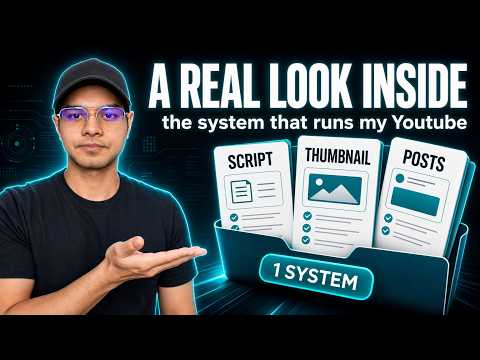
A real look inside the Clarity Works content engine: the staged system that turns one recording into the YouTube channel and Sprint pre-watch library.
The hidden operating costs that build up when AI adoption stays a someday project: wasted time, slower response, and growing team capability gaps.
A plain-English case for why AI changes leverage for small teams, and why adoption speed matters more than tool collecting.
The Sprint explainer: how a team improves one SOP, ships one real AI-assisted workflow, and leaves with the method to build the next one.
The belief-ladder starting point: why AI is not a side tool anymore, and what it unlocks when a business uses it inside real work.
A practical menu of high-leverage workflows to improve before chasing agents: the kinds of boring systems that actually save time.
Why the loudest pain is not always the best first build, and how to choose a frequent, useful, low-risk workflow your team can adopt.
The vocabulary that makes AI work practical: what a task is, what a workflow is, and why SOP quality decides whether AI sticks.
The source-of-truth document that gives AI enough business context to stop producing generic output and start sounding like the company.
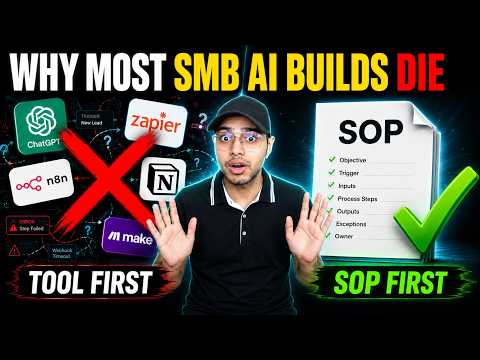
The core Clarity Works thesis: you cannot automate chaos. Clean the workflow and SOP before you ask AI to speed it up.
How to move from treating AI like a search box to using it as a thinking partner that can reason with your business context.
A decision lens for owners considering outside help: know what your team needs to understand and own before paying someone else to build.
The selection method behind finding the first AI opportunity, instead of chasing scattered tool ideas or the loudest operational pain.
The boundary-setting video: where human judgment, trust, or messy exceptions should stay close to the work instead of being automated away.
A simple pre-automation filter for checking whether the process is clear, valuable, and safe enough to improve with AI.